Groundsource: Google’s AI Is Helping Communities Predict Natural Disasters Before They Happen

Natural disasters are becoming more frequent, more destructive, and harder to predict. From sudden urban flash floods to deadly heat waves, communities around the world often have little time to prepare.
Now, Google is introducing a new AI-powered methodology called Groundsource, designed to change that reality.
Powered by Gemini, Groundsource transforms millions of public reports into structured disaster datasets that can help predict natural disasters before they happen — starting with urban flash floods.
This breakthrough could become one of the most important uses of artificial intelligence in climate resilience and disaster management.
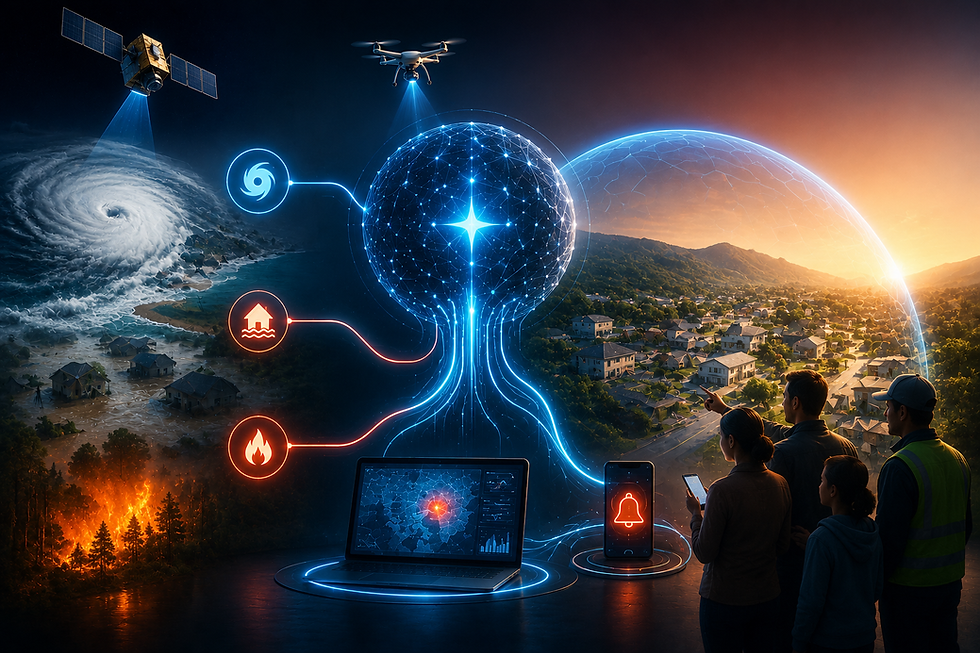
AI Meets Disaster Prediction
For years, scientists struggled with one major problem: There wasn’t enough high-quality historical data for flash floods.
Unlike earthquakes or hurricanes, urban flash floods happen quickly and often lack consistent records. Without reliable datasets, training AI models for accurate flood prediction was nearly impossible.
That’s where Groundsource changes everything.
Using Gemini AI, Google analyzed decades of publicly available reports and identified:
Over 2.6 million historical flood events
Data from 150+ countries
Precise geographic flood boundaries
Historical disaster patterns in urban areas
The system then combined this information with Google Maps data to build one of the world’s largest urban flash flood datasets.
What Is Groundsource?
Groundsource is an AI-powered disaster intelligence methodology developed by Google Research.
Its goal is simple:
Turn scattered public information into structured, high-quality disaster datasets that AI can learn from.
Instead of relying only on government flood databases or sensor networks, Groundsource uses AI to process:
Public reports
Historical archives
News coverage
Community observations
Geographic mapping data
This allows AI systems to detect disaster patterns at a global scale.
How Groundsource Works
Here’s a simplified breakdown of the process:
Step | What Happens |
Data Collection | Gemini scans decades of public flood reports |
AI Analysis | The AI identifies real flood events |
Geographic Mapping | Google Maps defines exact flood locations |
Dataset Creation | Millions of flood records become structured data |
AI Training | Flood prediction models learn from the dataset |
Forecasting | The model predicts urban flash floods up to 24 hours ahead |
This methodology helps fill one of the biggest gaps in disaster prediction: reliable historical data.
Why Urban Flash Floods Are So Dangerous
Urban flash floods are among the most unpredictable natural disasters.
They can happen within minutes because cities contain:
Concrete roads
Poor drainage systems
Dense infrastructure
Limited water absorption areas
Even small amounts of heavy rainfall can overwhelm cities quickly.
Unlike river floods, urban flash floods are extremely localized and difficult to forecast accurately.
That’s why Groundsource’s AI model is such a major advancement.
Google’s Flood Hub Expansion
The new urban flash flood forecasts are now integrated into Google’s Flood Hub platform.
Flood Hub already provides river flood forecasting coverage for nearly:
2 billion people
Across 150+ countries
Now, the addition of urban flash flood forecasting significantly expands Google’s disaster prediction capabilities.
This means communities may receive earlier warnings before severe flooding occurs.
Key Features of Groundsource AI
1. AI-Powered Historical Analysis
Groundsource can analyze massive amounts of historical reports far faster than human researchers.
This allows Google to uncover disaster patterns hidden across decades of fragmented information.
2. Global Flood Dataset
The platform created one of the largest urban flood datasets ever assembled.
Dataset Highlights
Metric | Value |
Historical Flood Events | 2.6 Million+ |
Countries Covered | 150+ |
AI Engine | Gemini |
Forecast Window | Up to 24 Hours |
Main Focus | Urban Flash Floods |
3. Open-Source Research Support
Google says Groundsource provides an open-source benchmark that researchers and scientists can use to improve future disaster prediction systems.
This could accelerate innovation globally.
4. Future Disaster Applications
Groundsource may eventually expand beyond floods.
Google believes the same AI methodology could help predict:
Landslides
Heat waves
Wildfires
Extreme weather events
Climate-related emergencies
This could make AI a core tool for climate resilience worldwide.
Why This Matters Globally
Climate change is increasing the intensity and frequency of extreme weather events.
According to global climate experts:
Cities are becoming more vulnerable to flash floods
Infrastructure systems are under pressure
Early warnings save lives
Data gaps remain a major challenge
Groundsource directly addresses that data problem.
By transforming public information into AI-ready datasets, Google is building systems that may help communities prepare earlier and respond faster.
How Gemini AI Powers Groundsource
Gemini plays a central role in Groundsource.
The AI model can:
Understand unstructured reports
Identify real disaster events
Extract geographic context
Analyze historical patterns
Organize massive datasets automatically
Without modern generative AI, processing millions of fragmented flood reports at this scale would have taken years.
Gemini dramatically speeds up that process.
Benefits of AI-Based Disaster Forecasting
Faster Emergency Response
Earlier predictions help emergency teams prepare resources faster.
Better Community Preparedness
People gain more time to evacuate or protect homes and businesses.
Improved Scientific Research
Researchers receive access to higher-quality disaster datasets.
Scalable Global Coverage
AI allows forecasting systems to scale across multiple countries simultaneously.
Challenges and Limitations
While Groundsource is promising, challenges still exist.
Data Accuracy
Public reports can sometimes contain incomplete or inaccurate information.
Regional Infrastructure Differences
Flood behavior varies between cities due to local infrastructure.
AI Prediction Complexity
Natural disasters involve highly dynamic environmental systems that remain difficult to forecast perfectly.
Still, Groundsource represents a major step forward compared to traditional methods.
The Bigger Vision Behind Groundsource
Google says its long-term goal is clear:
“No one should be surprised by a natural disaster.”
That vision reflects a broader shift happening across the AI industry.
Artificial intelligence is no longer focused only on chatbots or content generation. It’s increasingly being used to solve real-world global challenges, including:
Climate resilience
Disaster forecasting
Public safety
Environmental monitoring
Humanitarian response
Groundsource could become a blueprint for how AI supports communities during climate emergencies.
Final Thoughts
Groundsource shows how AI can move beyond convenience and become a critical public safety tool.
By combining Gemini AI, historical public reports, and geospatial mapping, Google has created a system capable of predicting urban flash floods before they happen.
As climate disasters continue to grow globally, technologies like Groundsource may become essential infrastructure for governments, emergency responders, and communities worldwide.
The future of disaster prediction may no longer depend only on weather stations and satellite imagery, but also on AI systems capable of learning from millions of human experiences across the planet.
FAQs
What is Google Groundsource?
Groundsource is Google’s AI-powered methodology that converts public disaster reports into structured datasets for predicting natural disasters like urban flash floods.
Which AI model powers Groundsource?
Groundsource uses Google’s Gemini AI model to analyze and organize historical disaster information.
What disasters can Groundsource predict?
Currently, it focuses on urban flash floods, but future applications may include landslides, heat waves, and other climate disasters.
How accurate is Groundsource?
Google says the system represents significant progress toward predicting urban flash floods up to 24 hours in advance.
Is Groundsource available publicly?
Its flood forecasts are integrated into Google Flood Hub, while the dataset and research support broader scientific collaboration.


Comments